Discussions and attempts to understand often struggle to escape the limitations of human centrism. Trapped in a persistent ethical dilemma, we find it difficult to navigate the unequal power dynamics that confine us. As the urgency of environmental and ecological issues intensifies, a question repeatedly emerges: Is it possible for us to construct a relatively equal multi-species world? Can we, with greater humility and introspection, relearn how to coexist with the Others? This fourth issue does not offer answers; instead, it comprises reflections and imaginations, as most contributors have long-standing experiences with or ongoing research on non-human animals. Through observation, education, painting, writing, and image-making, they seek to loosen the existing “ethical relationships” and “orderly rules.” Returning to the interior of the body, each vertebra of the spine accumulates traces of human transitions and memories that have yet to dissipate. However, the spine has never fully completed its evolution; its flaws are evident, and the hidden pain it causes always accompanies the body. Perhaps it is this persistent pain that continually reminds us that suffering, which may seem unrelated to us, can be perceived anew from the fissure of spines. By stepping into the bodies of Others, to feel and acknowledge them, a slow exchange occurs that reopens our imagination and generates a relationship that has yet to be named.
Publisher: te editions
Year: 2026
Pages: 172
Dimensions: 7.28” x 10.23”
Cover: Paperback
ISBN-13: 979-8-9890170-5-8
Language: Chinese, English
Discussions and attempts to understand often struggle to escape the limitations of human centrism. Trapped in a persistent ethical dilemma, we find it difficult to navigate the unequal power dynamics that confine us. As the urgency of environmental and ecological issues intensifies, a question repeatedly emerges: Is it possible for us to construct a relatively equal multi-species world? Can we, with greater humility and introspection, relearn how to coexist with the Others? This fourth issue does not offer answers; instead, it comprises reflections and imaginations, as most contributors have long-standing experiences with or ongoing research on non-human animals. Through observation, education, painting, writing, and image-making, they seek to loosen the existing “ethical relationships” and “orderly rules.” Returning to the interior of the body, each vertebra of the spine accumulates traces of human transitions and memories that have yet to dissipate. However, the spine has never fully completed its evolution; its flaws are evident, and the hidden pain it causes always accompanies the body. Perhaps it is this persistent pain that continually reminds us that suffering, which may seem unrelated to us, can be perceived anew from the fissure of spines. By stepping into the bodies of Others, to feel and acknowledge them, a slow exchange occurs that reopens our imagination and generates a relationship that has yet to be named.
Publisher: te editions
Year: 2026
Pages: 172
Dimensions: 7.28” x 10.23”
Cover: Paperback
ISBN-13: 979-8-9890170-5-8
Language: Chinese, English

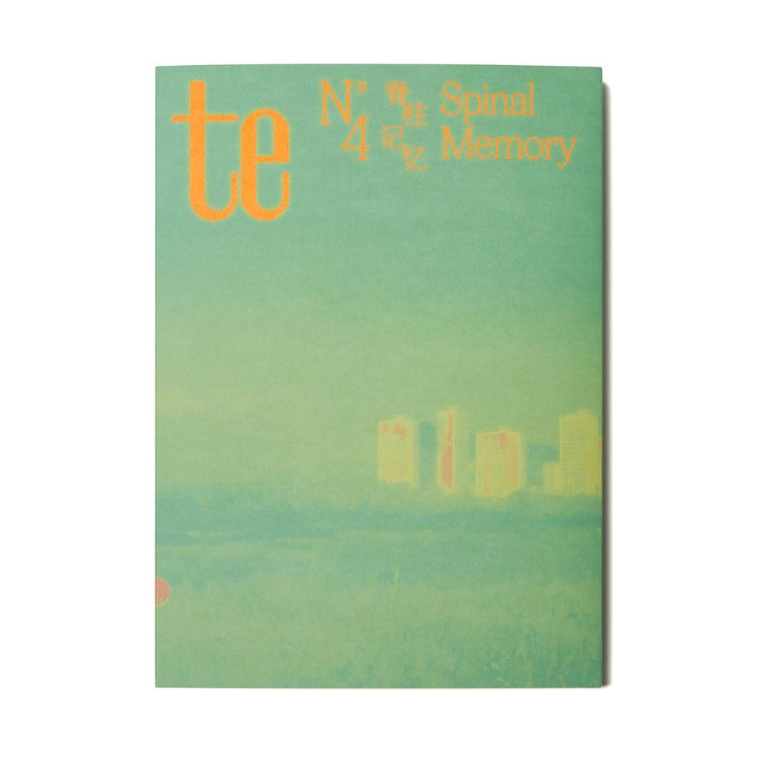 Image 1 of 1